Our Therapy Team
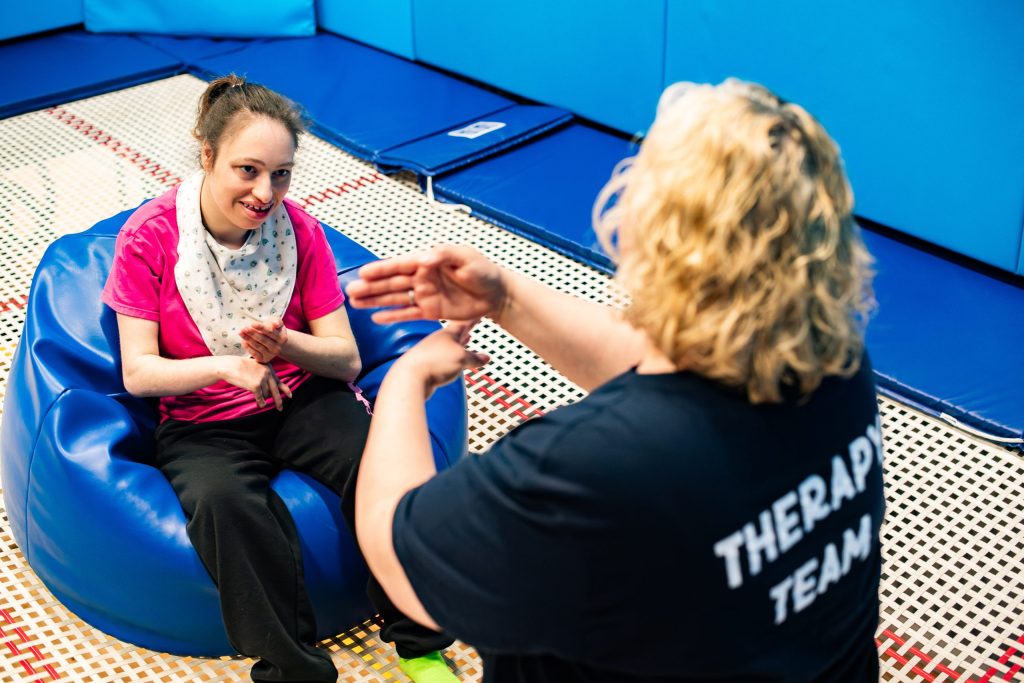
We are proud to have a comprehensive in-house therapy team, comprising of Speech and Language therapists, Occupational therapists, a SEMH (social, emotional and mental health) team, Physiotherapists, Education Audiologist, Teachers of the Deaf and a Counsellor. We provide an integrated therapy approach throughout the curriculum.
The Therapy Team works in close collaboration with the Academy Education Team, the Residential Care Team, all external agencies, and families/carers, to maximise best possible outcomes for all our students. We know that children and young people learn and move forward in their educational journey when the needs identified in their EHCP are supported. We provide assessment, treatment and advice as required based on each students’ individual needs. As an integrated team, we also provide support and training to staff, so that they can better support our learners.
Multi-sensory Impairment (MSI)/Deafblindess
Multi-Sensory Impairment (MSI) is the term most commonly used within education in the UK, although it is often referred to as deafblindness. Neither term necessarily means that a person is completely deaf or completely blind. Rather, it describes a combined vision and hearing impairment that affects how a person accesses information, communicates, learns, and interacts with the world around them.
At The Deaf Academy, we understand that every child and young person with Multi-Sensory Impairment (MSI) experiences the world differently. We are committed to providing personalised support that enables each learner to thrive, achieve their potential, and participate fully in school, college, and community life. The Department for Education (DfE) recognises Multi-Sensory Impairment (MSI) as a specialist area of sensory impairment and requires teachers working in this field to hold a mandatory qualification. This specialist qualification is known as the Qualified Teacher of Multi-Sensory Impairment (QTMSI). The Deaf Academy is fortunate to have two QTMSIs, with Anna Higgins leading on MSI practice, provision, and strategic development across the organisation.
Our provision aims to enable learners to develop the skills and confidence needed to access and participate in all aspects of life, with a particular focus on four key areas:
· Communication
· Access to information
· Independent mobility and orientation
· Participation in everyday life
Through staff training across both education and care, personalised support, specialist strategies, and collaborative working with families and professionals, we strive to ensure that every learner can achieve their full potential and lead a fulfilling, inclusive, and independent life.
Communication Support Workers
Our team of Communication Support Workers (CSWs) support students and others in a range of settings. All of our CSWs are trained to BSL Level 3 and above, and some have BSL Level 6 or are qualified interpreters. The CSW team is a group of professionals employed to provide communication support for students on an individual basis or as part of a group with other deaf students. This takes place at the Academy and in mainstream educational institutions such as primary schools, secondary schools, mainstream colleges, universities and other educational organisations.
Our bilingual approach to learning means the role of a CSW is multi-faceted, which is of huge benefit to our students and supports those students who are also educated in mainstream settings. Whilst BSL is an important communication tool for deaf students, many students have unique learning needs and require more than one form of support day-to-day.
CSWs also provide Signed Supported English, note taking, language modification and tutorial support. This level of bespoke support enables students to fully access educational information contained within curriculums and any other educational and social environments, in a manner best suited to their individual needs.
Technology at the Academy
At the Deaf Academy we continue to embrace new technology and are constantly evolving and innovating our approach to learning.
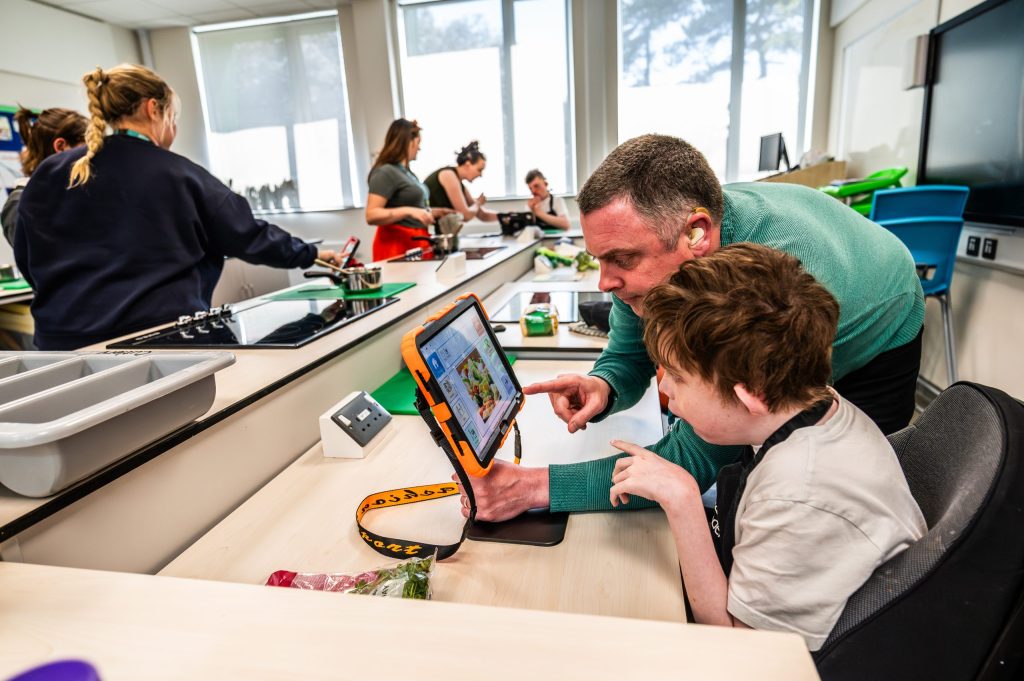
One of our most successful advances is our use of Augmentative and Alternative Communication (AAC) tools to help people who struggle with speech. Our staff take a unique, inclusive approach by combining personalised AAC use with BSL, ensuring all communication forms are accessible. Students use their AAC devices out in the local community, helping them overcome communication barriers with the hearing community. Students now confidently interact in public, supporting their independence and reducing their reliance on staff interpreters.
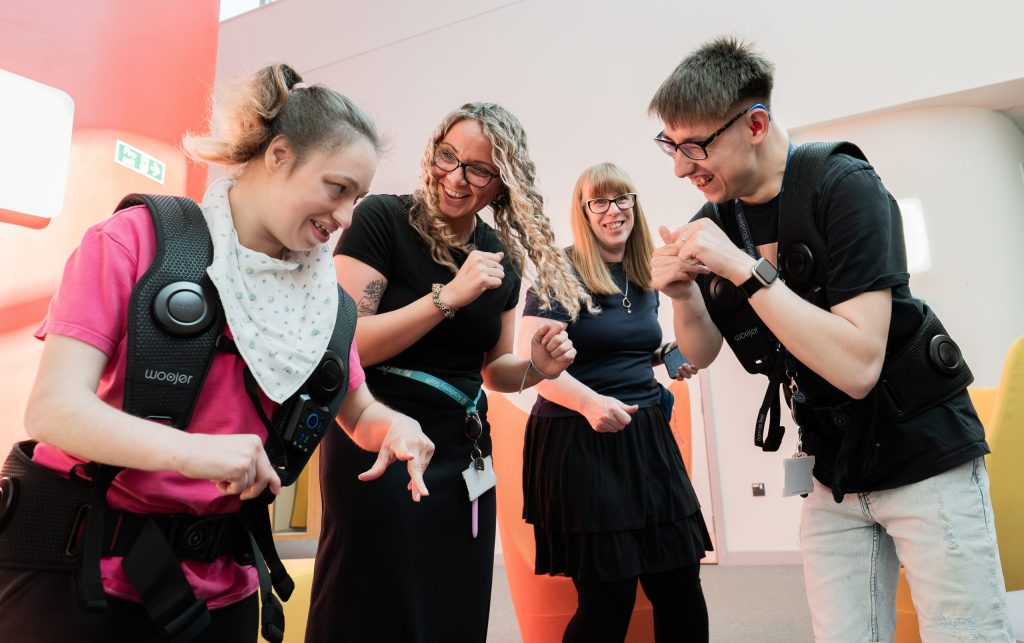
Our students also enjoy the use of our new state-of-the-art vibrating vests and mats called Woojers, which embrace the latest in haptic and Bluetooth technology. They were kindly donated to the Academy by Exeter Southernhay and Topsham Rotary Club. They have a wide range of therapeutic, educational and social benefits, enabling students to experience sound through vibrations.
The Academy has also recently introduced Virtual Reality headsets into learning. The VRs are being used for creating immersive learning experiences, such as virtual field trips to historical sites like the Titanic or the Amazon rainforest and enabling collaborative problem-solving in virtual spaces. We are also using them to support students’ fitness, coordination and well-being.